
I Used Google’s NotebookLM for 2 Years and It Changed the Way I Learn Forever
This free Google AI tool quietly became my personal mentor, researcher, and business coach.


When I first opened Google’s new AI tool, NotebookLM, I thought it was just another fancy note-taking app.
But after using it for over 100 hours, I realized it wasn’t just a note-taking app; it was a true thinking partner.
Because it connected ideas I didn’t even know were related. It turned my messy notes into clear frameworks. It helped me write better, learn faster, and build smarter.
And now, after using it for nearly two years, I can confidently say NotebookLM has completely changed how I learn, create, and think.
But here’s the problem: 99% of people who’ve tried it barely scratch the surface. They upload a PDF, ask a few basic questions, and think, “That’s it?”
The truth is, NotebookLM becomes mind-blowingly powerful only when you know how to use it as your second brain.
And that’s what I’m going to show you, the same use cases I’ve tested over 100+ hours that helped me work faster, think deeper, and produce more in less time.
But first let’s start with the basics so you understand what makes it different from every other AI tool out there.
Note: If you found this post valuable or learned something new, consider becoming a paid subscriber to this newsletter. It’s the best way to support my work and keep this kind of content coming.
What is NotebookLM?
Well, NotebookLM is an AI-powered thinking and research tool by Google that helps you make sense of complex information. It’s built on Google’s Gemini model, which means it understands text, audio, and visuals together.
You can upload your own sources like PDFs, Google Docs, YouTube videos, web articles, lecture notes, or even research papers, and it becomes your personalized companion built around your knowledge base (not the entire internet’s noise).
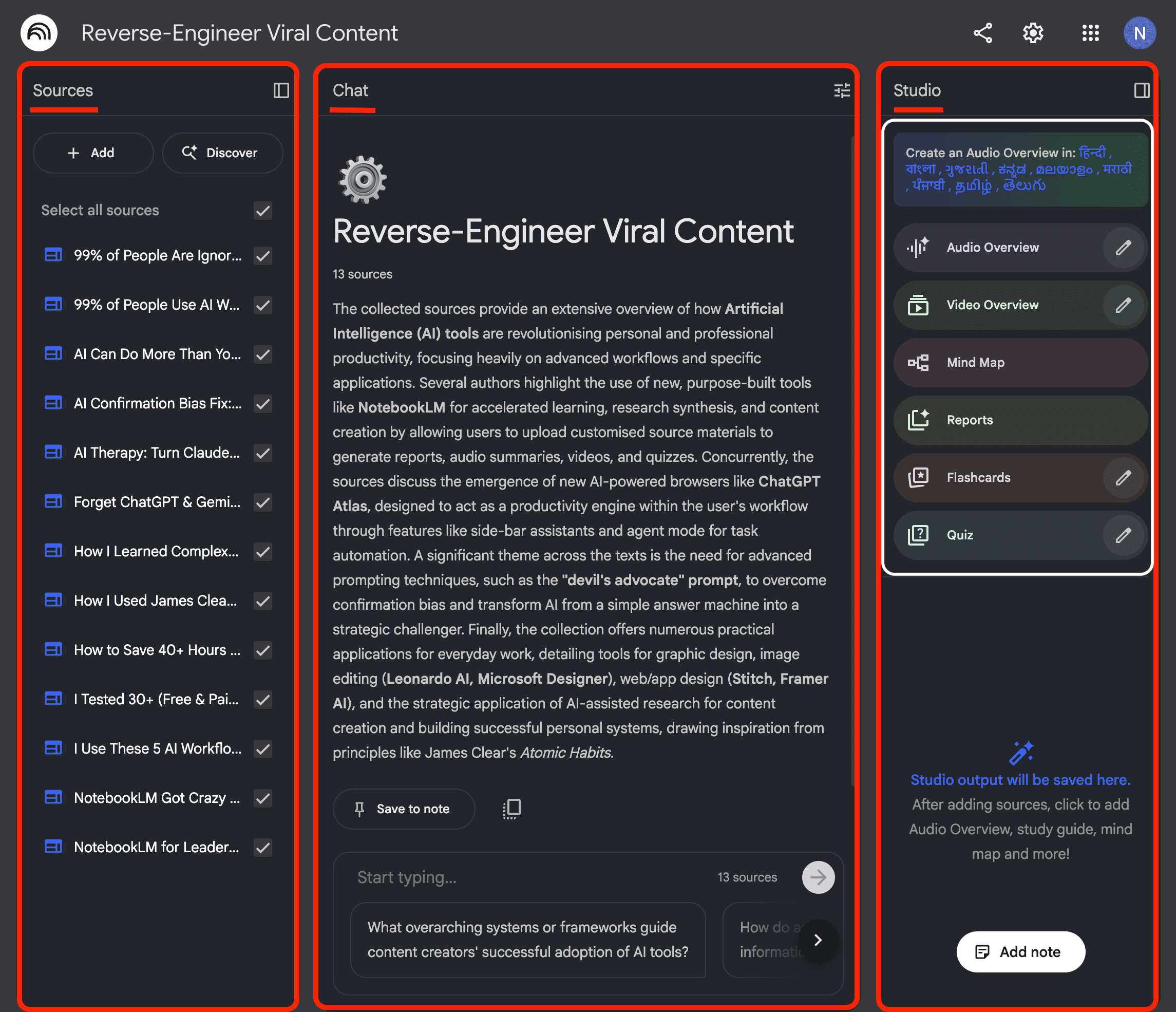
You can then ask it questions, find insights, connect dots between ideas, and even generate audio discussions that sound like a podcast made from your notes, video overviews, mind maps, flashcards, quizzes, and much more.
And the best part? The Google team keeps updating and integrating more features, like recently adding an 8x larger context window, 6x longer conversation memory, persistent conversations that don’t vanish when you close the tab, and more.
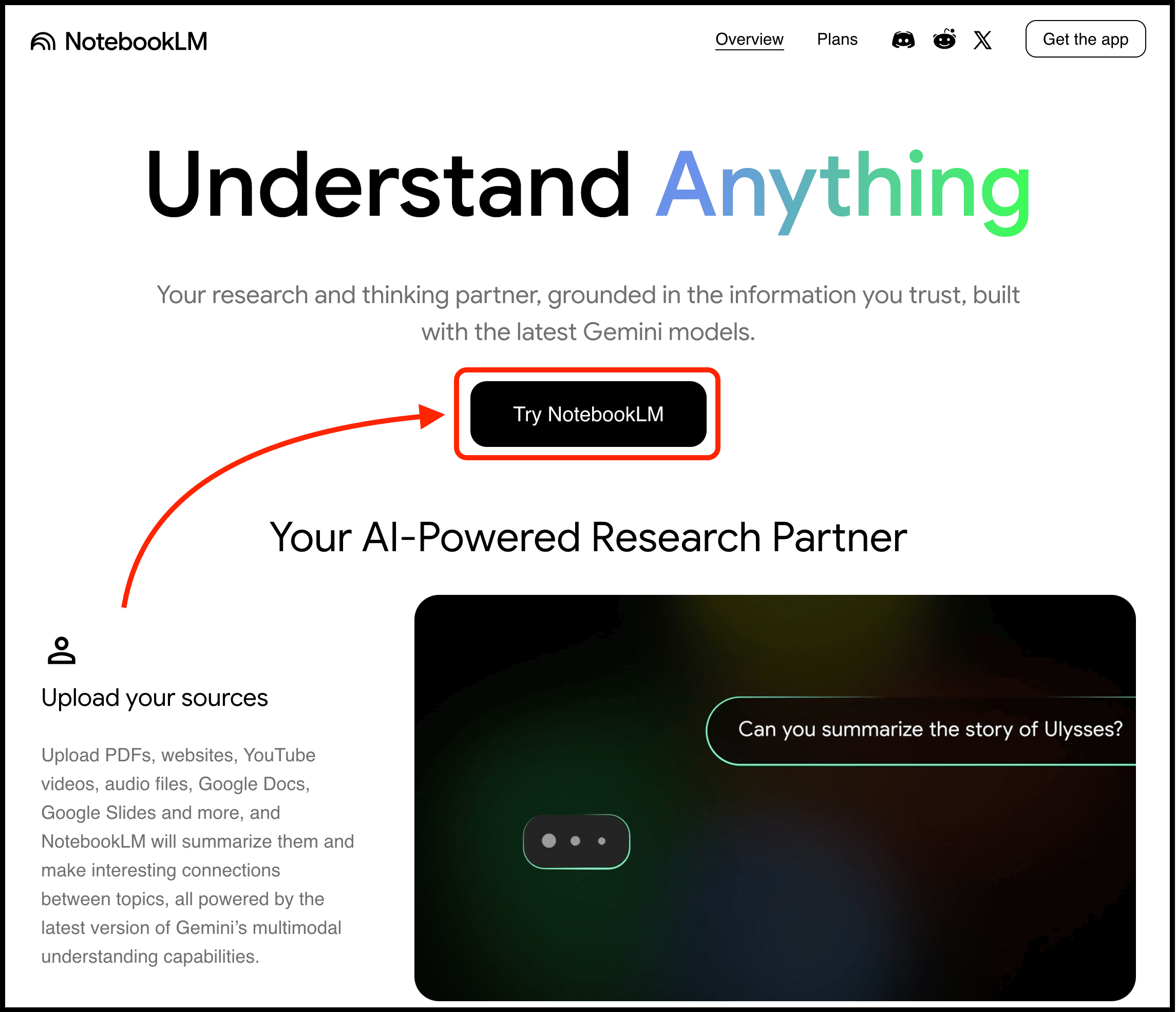
To get started, just visit their website and create your account. Then create a new notebook and upload your sources in any format you prefer to chat about what you want.
The best part? It’s free to use, and here’s a hands-on guide to NotebookLM and its latest features.
Now, let’s get into the fun and crucial part.
I’ve spent hundreds of hours experimenting with NotebookLM to see how far I can push it.
And what I discovered isn’t in any YouTube tutorial or Google blog post.
With that said, here are seven of the most powerful, practical, and mind-blowing ways I use NotebookLM to work smarter, learn faster, and build better things.
1. Reverse-Engineer Viral Content and Create Your Own System
If you write online, then this one’s gold for you.
I took a couple of my most viral Substack posts and uploaded them to NotebookLM. Then I uploaded a few more viral posts from other creators in my niche.
Then I asked:
What structure, tone, and emotional triggers make these posts go viral? Summarize the patterns.
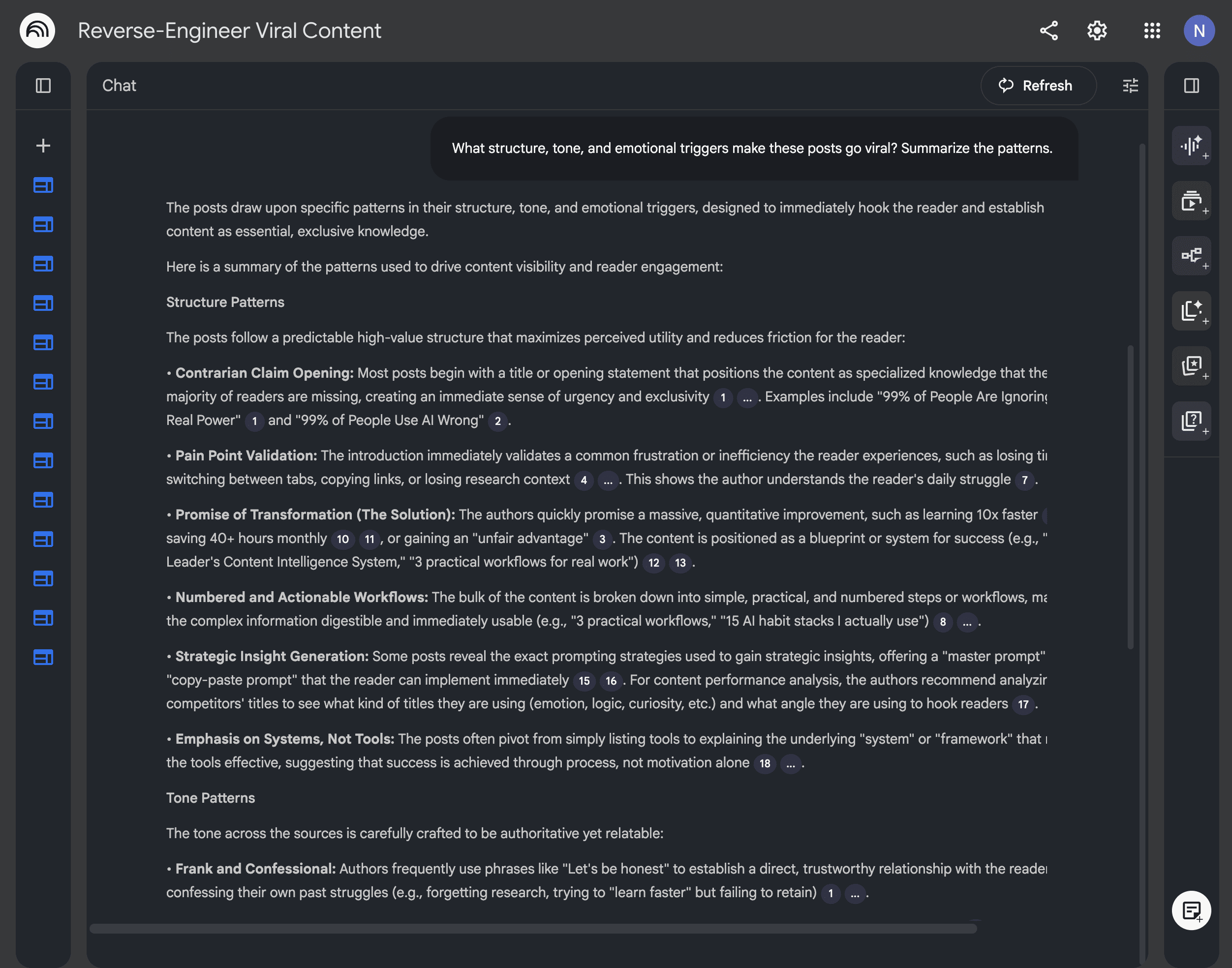
What came back was a breakdown of:
Opening sentence patterns that grab attention
Emotional shifts that make people read till the end
How certain words increase engagement
Now, before I write a post, I ask:
Based on this analysis, help me outline my next article in the same viral structure.
Help me write a viral title by analyzing these posts. My topic is as follows…
You see, it’s more like a data-driven content coach built inside NotebookLM that helps me write better.
2. Build a Personal AI Mentor
I’ve always believed mentors we find over the internet are overrated.
Most of them just want to sell their course or some coaching and provide generic advice. And the ones who are genuinely good rarely have enough time.
So here’s what I did instead: I built my own based on the mentors I actually want.
But how? Well, I uploaded:
3 books by Alex Hormozi
2 by Naval Ravikant
A few interviews from YouTube
And some blog posts from Sahil Bloom
Then I can ask multiple questions that come to my mind, like:
Based on these sources, what’s the one mindset shift these people share about building wealth and leverage?
What are the best habits I need to build according to these sources to create wealth?
And so on.
Every time, it gives me a unified framework showing their common beliefs, differences, and how they think about growth.
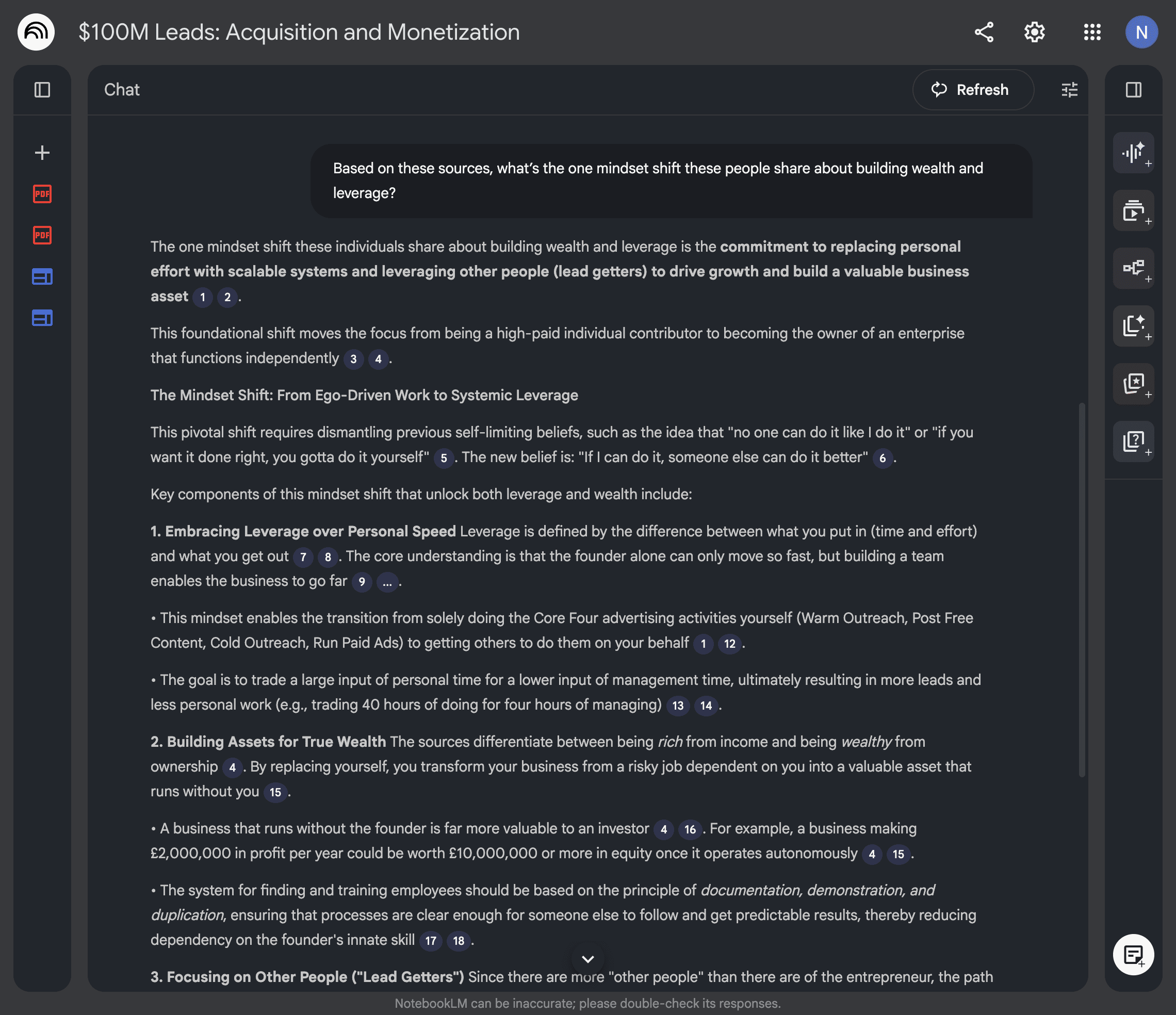
And whenever I hit a wall, I literally ask my AI mentor (built in NotebookLM):
“What would Hormozi or Naval advise me to do in this situation?”
That’s how you learn from the greatest minds on earth without ever meeting them.
3. Build a “Second Brain” That Actually Thinks With You
If you’ve ever used Notion, you know it’s a storage tool. But NotebookLM? It’s an active brain, at least for me.
That’s where I upload:
My saved tweets
Notes from my favorite newsletters
Old blog drafts
Personal reflections
Then I asked:
“Summarize recurring themes across all this content, what do I seem obsessed with?”
It came back with insights that even surprised me.
Turns out, 80% of what I write revolves around “clarity and independence through AI”.
Now I know my core content DNA, and I use that to decide what I write next.
4. Build a Full Business Playbook From Scratch
Thanks to the launch of Cursor, Claude, and ChatGPT, it has become extremely easy to build your own product without writing a single line of code.
And now, I can see that many individuals are building their own products and releasing them on the internet to help people and solve their pain points.
So, if you’re one of them, building a startup or even a product, this one will blow your mind.
Let’s say you’re building a SaaS tool or a digital product.
Upload:
Your business idea document
Competitor websites
Customer research notes
A few investor letters or case studies
Then ask NotebookLM:
Based on these sources, create a clear business playbook including the target audience, USP, marketing plan, and growth roadmap.
NotebookLM will literally connect the dots across everything you uploaded and generate a coherent strategy in seconds.
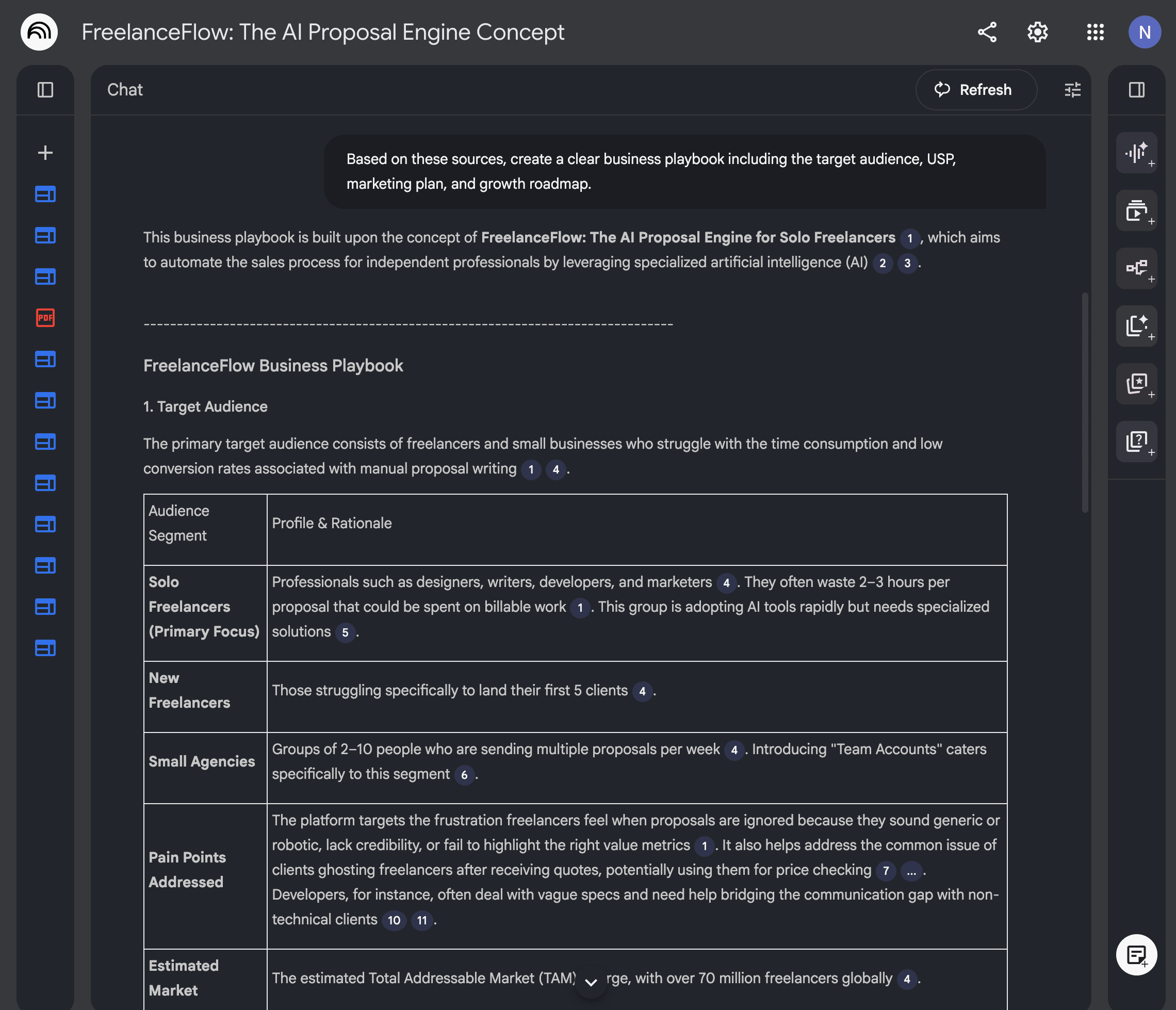
You can even ask follow-ups like:
What’s missing in my business model that competitors are doing better?
And so on.
Insanely useful, right?
Keep reading with a 7-day free trial
Subscribe to AI Made Simple to keep reading this post and get 7 days of free access to the full post archives.